
Etna is erupting right now
Real-time indicators
VONA INGV(opens in a new tab) 29 Sept, 09:51 · Automatic INGV estimates · NASA satellites
- Aviation code
- Orange
- Green
- Yellow
- Orange
- Red
- previously red
- Ash
- Weak
- Volcanic tremor
- High
- 986 nm/s · stable
- Explosive activity
- High
- 3,118 nm/s · stable
- Quakes 24 h
- 1
- max M1.1
- Hot spots
- 12
- last pass 30 Sept, 03:15
Flights to and from Catania may be affected: check with your airline. Catania airport notices(opens in a new tab)
What's happening
Automatic summary of INGV data
As of 30 September 2026, INGV's VONA notice of 29 September reports an ongoing weak ash emission producing a dilute ash cloud, with an orange aviation color code. The last INGV volcanic bulletin of 26 August indicated the end of the previous phase, while recent satellite observations detect summit thermal anomalies at elevated levels. With an orange code and ongoing ash emissions, flight disruptions are possible; travelers are advised to check their flight status with their airline.
Satellite map
NASA FIRMS hot spots · INGV quakes
Want to see it live, safely with a volcanological guide?
Licensed guides · reply within minutes on WhatsApp
Etna is an extraordinary volcano: with its 3,347 meters in height it is Europe's tallest active volcano and one of the most active in the world. Its volcanic activity is almost continuous, alternating quiet phases with spectacular eruptive episodes that make it one of Sicily's most fascinating natural wonders.
Current Status of Etna: INGV Real-Time Bulletins
To immediately know if there is an ongoing eruption and what is the current status of Etna, consult the latest multidisciplinary bulletins published by the INGV Etna Observatory. Bulletins are published during eruptions or in case of significant volcanic activity variations and provide detailed information on lava flows, ash emissions, volcanic tremor, ground deformation, infrasonic activity and explosive events from summit craters.
Discover Latest Etna Eruption
Monitor Etna eruptions in real-time with official INGV bulletins
Recent Etna Eruptions 2026
Here is an overview of the latest significant eruptions. The best visibility conditions have always been from the northern side, particularly from Piano Provenzana and Rifugio Citelli.
Voragine Paroxysm and Lateral Eruption: Lava Fountain, New Vents and Flight Disruption
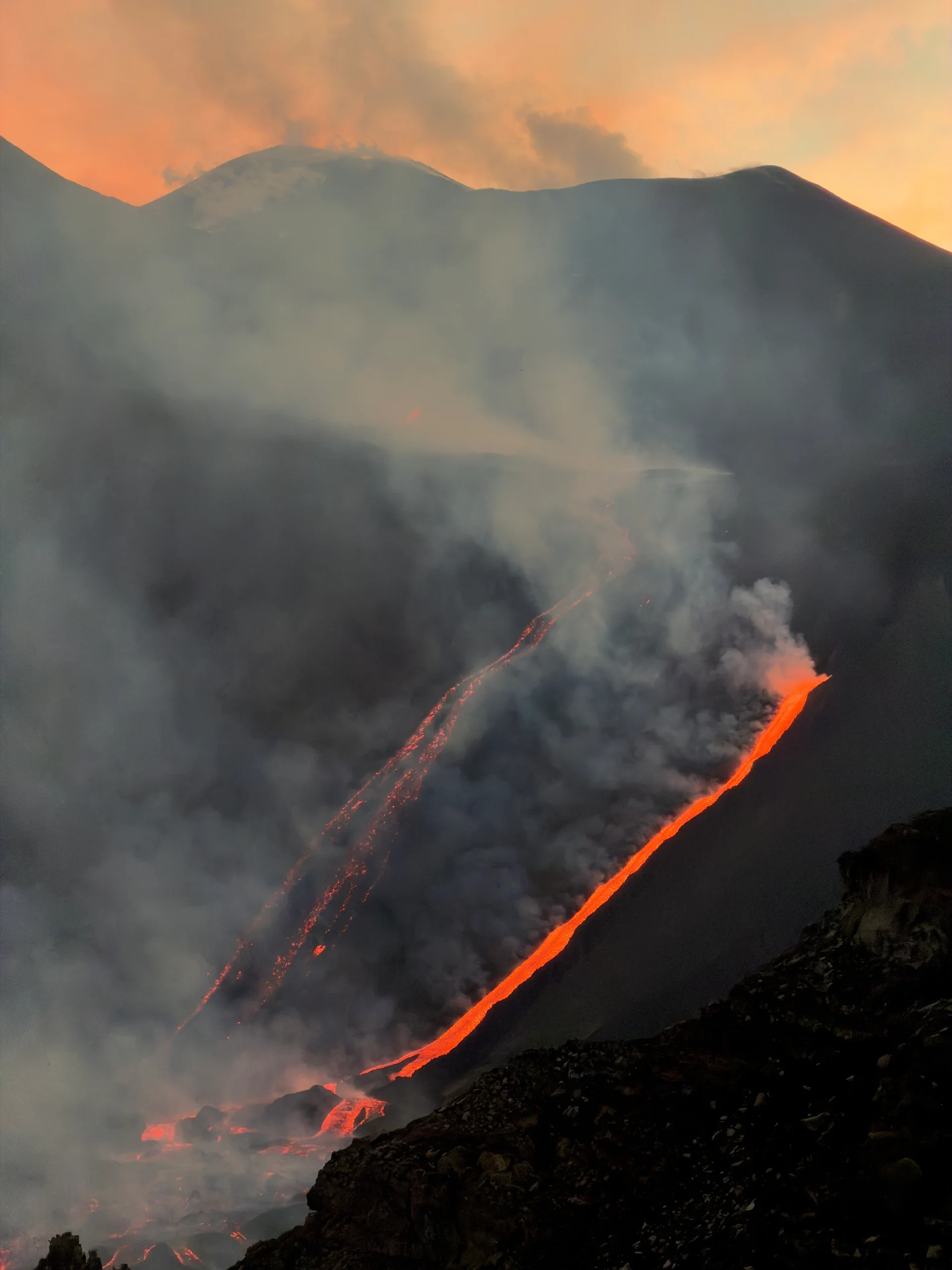
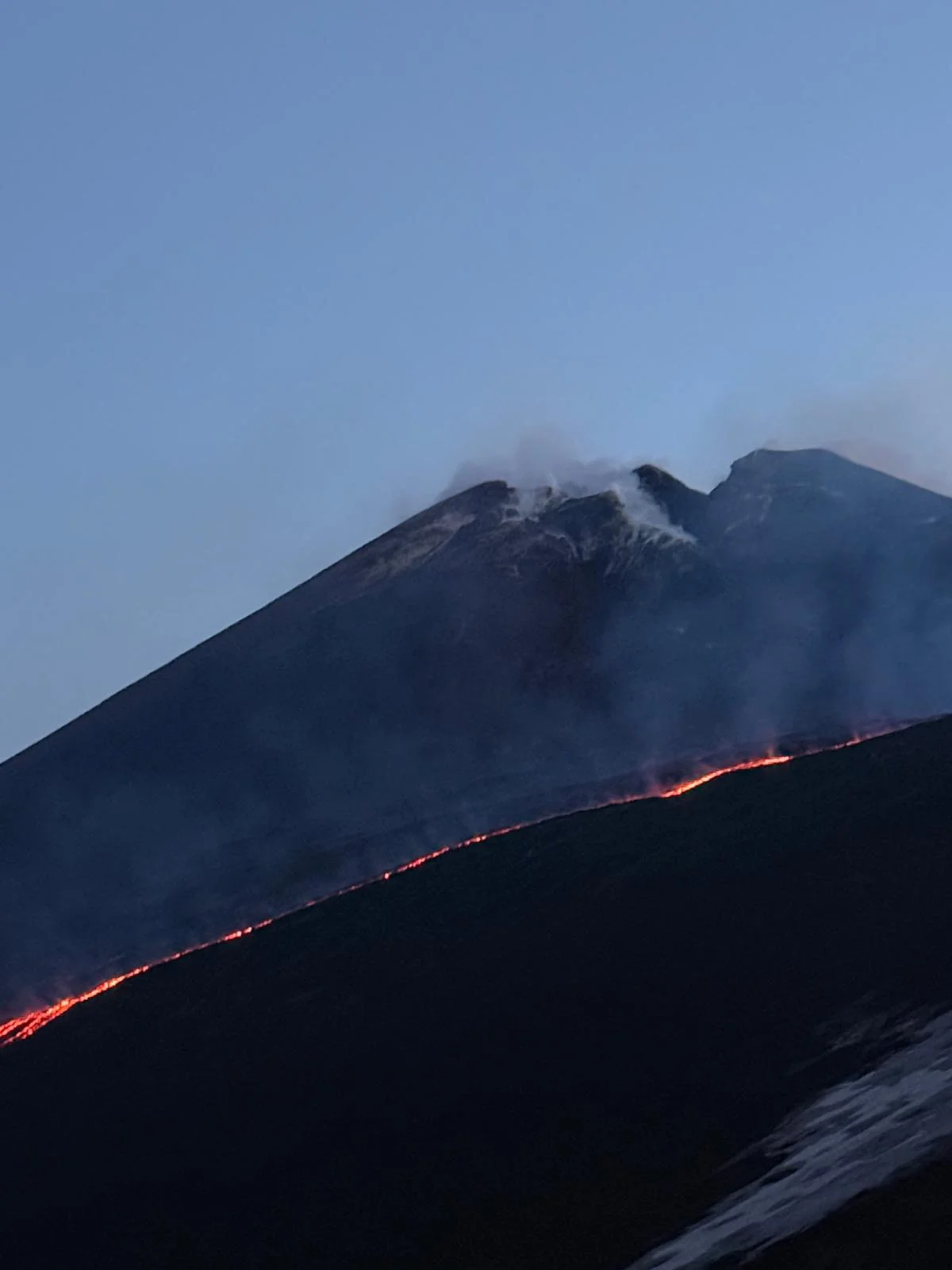
After a few days of calm, late on the evening of 6 August a violent lava fountain from the Voragine Crater lit up the night, peaking until 04:00 on 7 August, with ash emission that briefly affected flights over Catania. The activity then evolved into a spectacular effusive lateral eruption: on 7 August a vent opened at ~2,750 m between the Valle del Leone and the Valle del Bove, feeding a lava flow that descended to ~1,850 m; on 8 August a second vent at ~2,550 m near Monte Rittmann opened a new lava front. The incandescent flows, clearly visible at sunset, ran down uninhabited areas, with no danger to inhabited centres.
New Paroxysm at the Voragine: Lava Fountain and Flow towards the Valle del Leone
On the night of 29–30 July, around 03:30, surveillance cameras recorded the resumption of Strombolian activity at the Voragine Crater, which intensified during the morning into a lava fountain with an ash cloud about 7 km high and a small pyroclastic flow towards the Valle del Bove. In the afternoon an eruptive fissure opened at about 2,700 m, with a flow that fed a lava field in the Valle del Leone (fronts reaching about 1,700 m, in an uninhabited area). Ash fell lightly on the town of Bronte. The explosive activity ceased abruptly on July 31 and the effusion died out between 1 and 2 August; drone surveys estimated a flow about 2.9 km long.
Explosive Phase at Voragine: Ash and Flight Disruptions
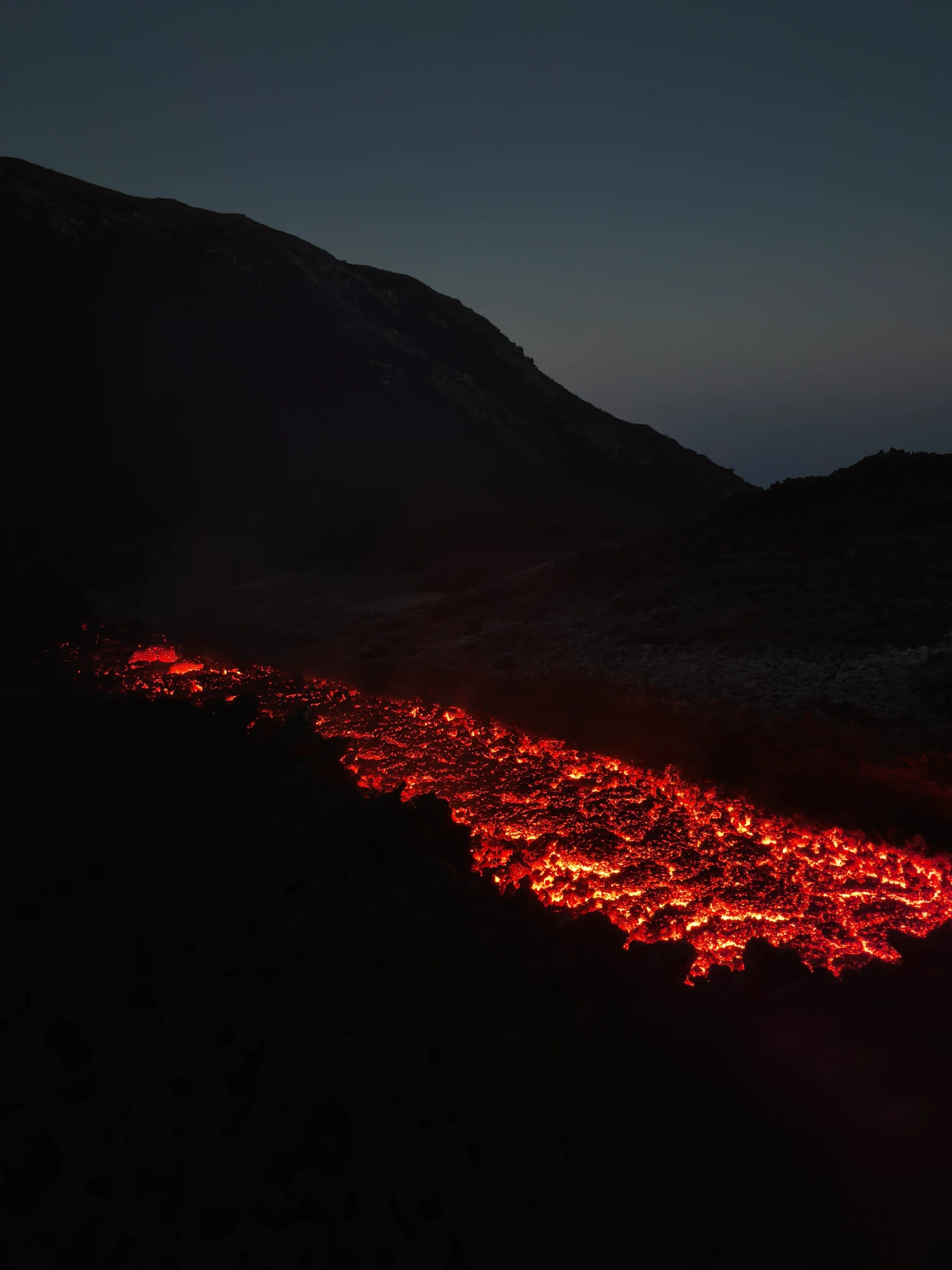
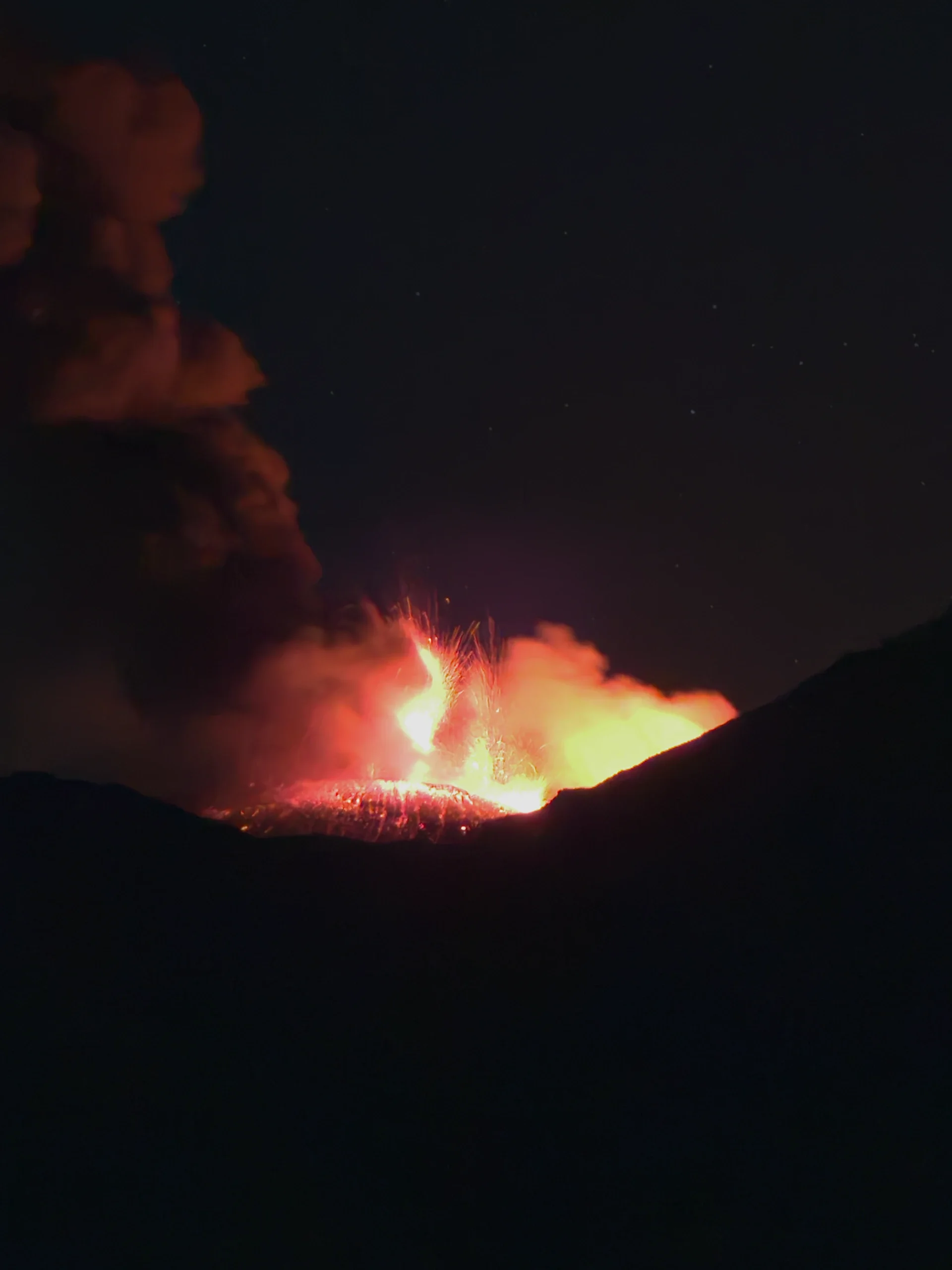
With the effusive lava flow exhausted (it ceased on July 4), the activity evolved in an explosive direction. From the morning of July 5 (around 05:45 UTC), an intense ash emission from the Voragine Crater generated an eruptive cloud that, at its peak between July 6 and 7, reached about 4 km in height. INGV raised the aviation alert to RED, with a heavy impact on Catania-Fontanarossa airport (about 188 flights cancelled and dozens diverted). The explosive activity ended on July 7, with the alert lowered to orange and the airport reopened. No damage to inhabited centres, only ashfall.
Effusive Eruption - Valle del Leone (Northeast Crater)
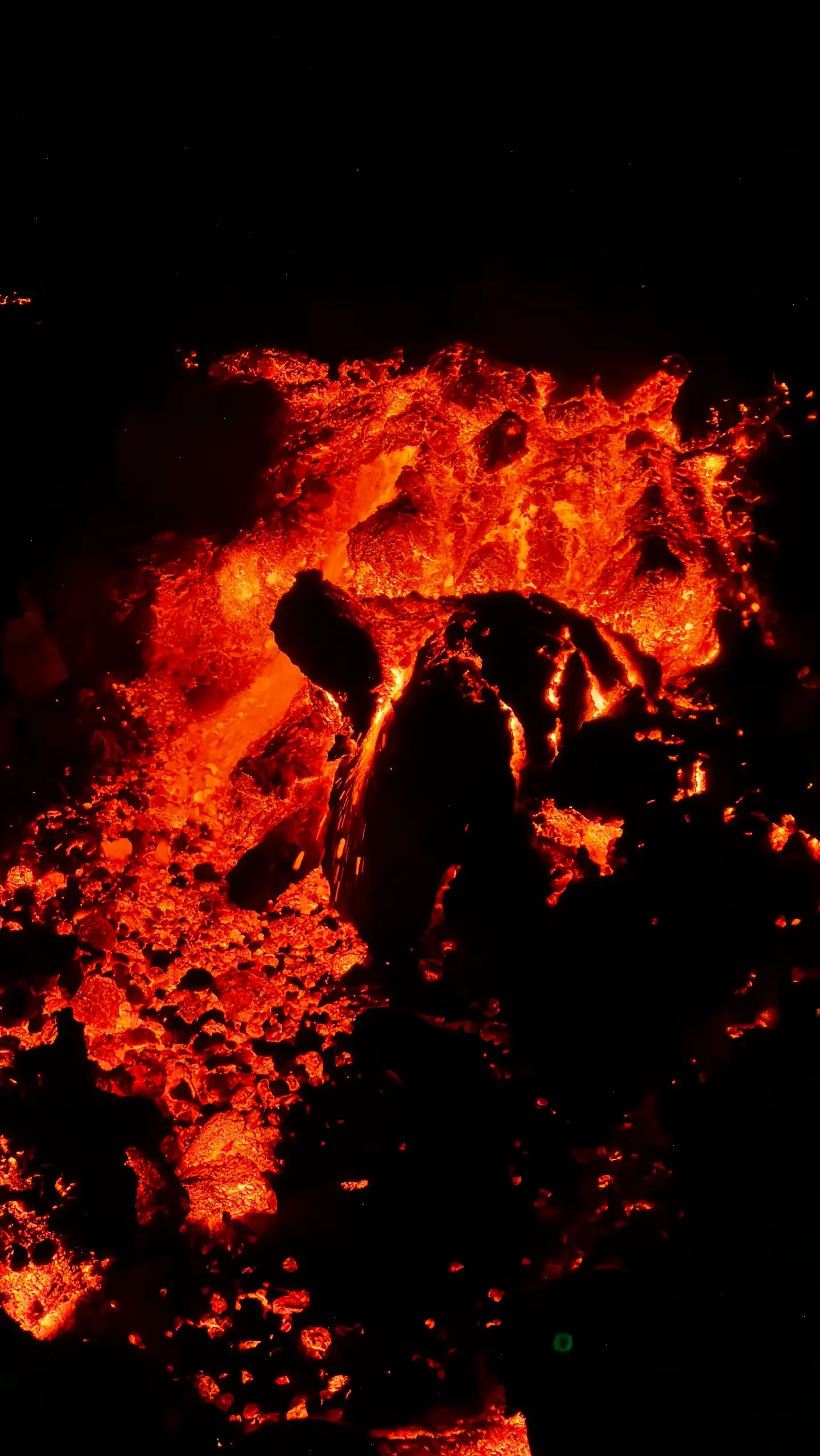
The summer of 2026 opened with a new eruptive phase on the northern flank. In the early afternoon of June 26, from a fissure that opened at about 3,000 metres altitude at the base of the Northeast Crater, an effusive eruption began, feeding a lava flow directed towards the Valle del Leone, in the upper Valle del Bove. The flow soon split into two branches, with the most advanced front settling around 2,700-2,800 metres, always in desert, uninhabited areas. At the Voragine crater, intense degassing was observed together with weak, irregular Strombolian activity at night. Italy's Civil Protection Department raised the alert level from green to yellow (aviation alert orange, VONA), with no danger to inhabited areas (INGV Etna Observatory bulletin of June 29, 2026).
This effusive phase ended on 4 July 2026, when the lava flow died out, giving way to the summit explosive activity described above.
Effusive Eruption - Valle del Bove
The year 2026 began with a new eruptive phase: on the afternoon of January 1st, surveillance cameras recorded the start of effusive activity inside the Valle del Bove. The eruptive fissure opened along the north-western wall, near Monte Simone (approx. 2,100 m a.s.l.), generating a lava flow extending eastwards. The most advanced front rapidly reached the Rocca Musarra area (~1420 m), mainly staying in desert and uninhabited areas. Monitoring systems recorded average volcanic tremor and low infrasonic activity, confirming the essentially quiet and effusive nature of the event, accompanied by Strombolian activity at the summit craters.
Want to walk where the lava flowed? Explore the Valle del Bove with a volcanological guide.
Types of Etna Eruptions: Effusive and Strombolian
Etna produces mainly two types of eruptions, each with fascinating characteristics for the aware tourist:
Effusive Eruptions
Characterized by lava flows that slowly flow from the volcano's flanks. Flows move rather slowly (rarely exceeding 10 meters per day), allowing both authorities and tourists to maintain safe distances. This type of eruption offers the best photographic opportunities and is the most frequent on Etna's northern slope.
Strombolian Eruptions
Consist of intermittent explosions from the summit crater, characterized by lava fountains, scoria launches and ash columns. They are spectacular especially at night, when the incandescent lava jet that illuminates the sky is observed. Strombolian activity is frequent at the Southeast and Voragine craters.
How Active is Etna?
Etna does not follow a regular schedule. It can remain quiet for weeks or months, then reawaken.
- August 2026: A Voragine paroxysm (6–7 August) that evolved into an effusive lateral eruption, with two new high-altitude vents (~2,750 m on 7 August and ~2,550 m, near Monte Rittmann, on 8 August) and lava flows active in the Valle del Bove; a few days earlier, another paroxysm (30 July–2 August). Red aviation alert and severe disruption at Catania airport.
- July 2026: Explosive phase with ash from the Voragine Crater (5–7 July), red aviation alert and flights suspended at Catania; ended on 7 July.
- June 2026: Effusive activity toward the Valle del Leone from the Northeast Crater base (~3,000 m), ended on 4 July.
- January 2026: Effusive activity in Valle del Bove (Monte Simone area, ~2,100 m).
- 2025: Significant episodes in February (effusive), June (explosive paroxysm), and August (effusive).
This unpredictability is part of the charm: every visit to Etna can offer different experiences.
Why is Etna Constantly Active?
Etna is located exactly between the African and Eurasian plates, one of the points of maximum tectonic tension in the region. This geological position makes it one of the most active volcanoes in the world, with almost continuous activity that alternates effusive phases (slow lava flows) with explosive phases (fountains and bursts).
The strombolian activity of the Southeast Crater, which has persisted for years, is the most regular manifestation of this volcanic vitality. It does not represent an immediate danger for those visiting authorized areas, but rather provides natural spectacles of inestimable scientific and tourist value.
Where to See the Etna Eruption Well? Guide to Observation Points
The northern slope of Etna, accessible from Linguaglossa, is currently the privileged observation point for eruptions. Here's why:
- Best angle: Recent eruptions develop in the southeastern and southwestern summit sector, perfectly visible from the north
- Accessibility: Less crowded than the southern slope
- Varied panoramic points: Multiple altitudes and angles for photography
- Weather conditions: Often fewer clouds than the southern slope
Piano Provenzana: Observation Point for Northeast Crater Eruptions
Piano Provenzana is the main tourist station on the northern slope, located just 18 km from Linguaglossa, immediately above the majestic Pineta Ragabo (Sicily's highest pine forest).
What Piano Provenzana offers for observing eruptions:
- Accessible altitude by car (paved road)
- Spectacular panoramic view of the summit with lava flows in the foreground surrounded by pine forest
- Information point and services
- During eruptions: access to trekking routes towards higher altitudes
- Extraordinary night visibility: When the sky is clear, incandescent lava is very visible at night
Visit recommendation: Piano Provenzana is ideal for those who want to observe the eruption without excessive fatigue. It's a good starting point before moving to more challenging routes.
History and Eruptions: Piano Provenzana has a history linked to Etna eruptions. The October 27, 2002 eruption - defined by scholars as "the perfect eruption" - almost completely destroyed the previous structure, but today Piano Provenzana has been reborn and is one of the privileged points for observing summit eruptions. The Etna 4x4 tour crosses the lateral craters formed during that eruption, offering a direct look at the volcanic power of the north side.
Discover Piano Provenzana: history, services, excursions and ski resort
Rifugio Citelli: Exclusive View of the Southeast Crater
Rifugio Citelli, official base point of Etna Park on the northeastern slope, is one of the best vantage points for excursions during eruptions.
Characteristics:
- Perfect position among beeches, pines and birches of Etna
- Starting point for the most suggestive trails: Serracozzo, Schiena dell'Asino
- Excellent observation point of summit craters, with direct view of the Southeast Crater during eruptions
For hikers during eruptions: From Rifugio Citelli it's possible to reach fed lava channels and observation points at higher altitudes (up to 2,850 meters based on activity).
Serracozzo Trail: Approaching Lava Flows in the Valle del Bove
One of the most fascinating trails during eruptions. Starts from Rifugio Citelli and climbs through lava rock gullies and alpine vegetation towards higher altitudes.
During eruptions: This trail allows approaching active lava fronts and observing flow channels, skylights and lava flowing deep underground.
The route crosses the Valle del Bove and includes a visit to the Serracozzo lava cave, formed during the 1971 eruption. The Serracozzo and Valle del Bove excursion offers a perfect educational route to understand Etna's geology and eruptive history.
Excursions During Etna Eruptions
Observing an Etna eruption up close is possible through specialized guided excursions with authorized volcanological guides. During periods of eruptive activity, tours are adapted in real time to ensure safety and spectacularity.
Excursions range from easy routes for families to advanced treks towards active lava fronts. Each tour includes:
- INGV certified volcanological guide
- Real-time activity monitoring
- Access to the safest areas closest to the eruption
During the August 2025 eruption, thousands of visitors observed the active flow without any incident. Lava is not a tsunami wave: it's a dense and slow flow that allows maintaining safe distances. The June 2, 2025 eruption caught some tourists by surprise who were climbing without a guide, while those accompanied by professional guides were evacuated in an orderly manner, demonstrating the importance of relying on authorized guides during eruptive phases.
Compare and book available Etna Nord excursions
When to Visit Etna During an Eruption?
There is no perfect moment to witness an Etna eruption, but some periods offer greater probabilities. The historically most active periods are February-June and August-September, although eruptions can occur in any season.
Recent average frequency: One observable eruptive episode every 2-4 months, but it's not a scientific rule. The key is to be ready and flexible when the volcano awakens.
- Check INGV bulletins regularly: If the volcano has recent episodes, it might resume soon
- Book excursions with expert tour operators: Guides know how to recognize precursor signals
- Be flexible: If you plan a week on Etna, you'll have better chances of seeing at least one minor eruptive episode
Etna eruptions do not follow a predictable schedule and can occur in any season. The historically most active periods are February-June and August-September, but the best visibility is in spring and autumn thanks to clearer skies.
Check Etna weather forecasts in real time, month-by-month climate and advice on what to bring
Is Visiting Etna Dangerous? Everything You Need to Know About Safety
The Short Answer: NO, if You Take the Right Precautions
Visiting Etna volcano is totally safe if:
- You follow official instructions from INGV (National Institute of Geophysics and Volcanology)
- You stay in authorized areas
- You are accompanied by a certified volcanological guide
- You wear appropriate equipment
- You respect temporary closure orders
Thousands of Italian and foreign tourists visit Etna every year in complete safety. The key is awareness and preparation.
Potential Risks When Visiting Etna: What to Know
1. Lava Flows
2. Seismic Activity (Earthquakes)
3. Ash Emissions
4. Unstable Terrain and Sharp Rocks
- Wear very sturdy trekking boots
- Use gaiters to protect ankles and legs
- Always walk with an expert guide who knows the terrain
- Follow the guide's instructions on stability
5. Extreme Weather Conditions
- Dress in layers (breathable base layer, intermediate fleece, waterproof jacket)
- Bring gloves, hat, scarf even in summer
- Wear sunglasses (sun reflects a lot on volcanic rock)
- Apply high sun protection (SPF 50+)
6. Altitude and Physical Difficulty
- Choose excursions suited to your fitness level
- If you have preexisting health conditions, consult your doctor
- Communicate with the guide during the excursion if you feel fatigue
- Drink plenty of water and maintain a sustainable pace
INGV Monitoring: How to Stay Safe During Eruptions
INGV (National Institute of Geophysics and Volcanology) monitors Etna 24/7 with sophisticated equipment:
- Seismic stations that detect tremors
- Thermal cameras to observe activity
- Deformation sensors that measure crust movements
- Geochemical stations that analyze volcanic gases
When potentially dangerous activity is detected, INGV issues bulletins that local authorities and tour operators use to decide whether to close areas or suspend excursions.
Legal Obligations: Authorized Volcanological Guides
By Italian law, to access Etna's summit areas (generally above 2,600-2,800 meters) it is mandatory to be accompanied by a certified volcanological guide.
Volcanological guides are registered with the Regional College of Alpine and Volcanological Guides of Sicily and have completed specific training on volcanology and safety.
Therefore: Don't entrust your visit to unofficial guides. Always choose a tour operator with INGV and Guide College certified guides.
Interpreting INGV Alerts
Volcanic Activity Color Code:
| Level | Volcano Status | Main Phenomena | Tourist Access |
|---|---|---|---|
| Green | Eruptive activity absent or very low | Degassing and occasional explosive activity. Ash clouds that disperse rapidly | Excursions allowed in all authorized areas |
| Yellow | Eruptive activity from low to medium | Lava fountains, lava flows, possible shallow earthquakes (M≥3.4) | Excursions allowed with authorized guides. Some areas may be closed |
| Orange | High eruptive activity | Lava flows from lateral fissures, pyroclastic flows, intense explosive activity | Excursions limited to safe zones. Ash and volcanic products fallout even several kilometers away |
| Red | Very high eruptive activity | Intense and continuous explosive activity, strong earthquakes. Possible severe seismic damage | Access forbidden to summit areas. Imminent danger. Possible involvement of inhabited areas |
Check the current alert level: Civil Protection - Monitoring Current Status of Etna
Living the Etna Eruption: A unique experience in the world
The Etna Eruption is one of the most extraordinary natural spectacles you can witness. Europe's tallest active volcano reserves unforgettable emotions: lava flows that glow at night, smoking craters, lunar landscapes, sea view from 3,000 meters altitude.
Safety is guaranteed by:
- INGV 24/7 monitoring
- Certified volcanological guides
- Clear authority orders
- Access to authorized and safe zones
Don't wait any longer. Contact our team to book your Etna adventure.
Discover the latest eruption, photograph the world's most fascinating active volcano and return home with a story that will remain forever in your memories.
Discover available excursions and book your guided experience to live the magic of Etna during an eruption!
Want to experience Etna up close?
With an authorized volcanological guide: from the craters of the 2002 eruption up to the panoramic viewpoint at 3000 metres. The volcano live, not on a screen.
Frequently Asked Questions about Etna Eruptions
Everything you need to know about Etna eruptions